
Bathroom Plumbing Problems in Hammersmith: What Needs Urgent Attention?

By Fastfix London
Some bathroom plumbing problems can wait for a planned repair. Others need attention straight away because water may be spreading behind walls, under floors or through a ceiling. The key decision is whether you can safely stop the water and contain the problem, or whether the fault needs professional leak detection and repair.
In short: Turn off the water if you can do so safely, isolate electricity if water is near electrical fittings, and call a plumber urgently for uncontrolled leaks, sewage contamination, loss of control over the water supply or signs of a hidden leak.
Which bathroom plumbing problems are urgent?
A bathroom plumbing problem is urgent when water cannot be controlled, the leak is affecting the building, or there is a risk to health or electrical safety. Do not wait for a routine appointment if you notice any of the following.
A burst or rapidly spreading leak
A burst supply pipe, failed flexible connector or split toilet connection can release a large amount of water quickly. Shut off the relevant isolation valve or the main stopcock if you can reach it without entering unsafe water, then arrange urgent plumbing help.
Do not rely on towels or a bucket if water is continuing to spread. Water can travel below flooring and into ceilings, so visible damage may be smaller than the actual affected area.
Water near electrical fittings
Water around sockets, switches, electric showers, extractor fans or other electrical equipment creates a separate safety risk. Keep away from wet electrical fittings and do not touch a switch while standing in water.
If it is safe to do so, switch off the electricity at the consumer unit. If reaching it would mean walking through water or touching wet equipment, leave the area and get qualified help.
An overflowing toilet or sewage leak
Stop using the toilet immediately if it is overflowing or backing up. If the inlet valve can be reached safely, close it; otherwise turn off the main water supply and keep people and pets away from contaminated water.

Sewage and wastewater should not be treated like a normal clean-water leak. Avoid spreading it with a mop, clean hands and footwear carefully, and arrange urgent assistance if the flow does not stop.
A leak from behind a wall, floor or ceiling
Damp patches, bubbling paint, stained ceilings, musty smells or unexplained water around the toilet or bath may point to a concealed leak. This is particularly important where there is a room below the bathroom, because damage can continue even when the visible flow is small.
Do not lift flooring or cut into walls unless you know where pipes, cables and other services are located. A plumber may need to assess the source using methods such as acoustic listening equipment, thermal imaging or pressure testing, depending on the fault.
No water, weak pressure or a toilet that will not refill
A sudden loss of water or major pressure change may be a supply problem rather than a fault with one bathroom fitting. Check whether other taps are affected, but do not assume the issue is minor if the change is sudden or accompanied by noise, dampness or a leak.
A toilet that will not refill is usually less urgent than an overflowing one, but it still needs attention if it leaves the toilet unusable or causes water to run continuously. A constantly running toilet can also point to a faulty inlet valve or flush mechanism.
What can you safely check first?
Simple checks can help you limit damage and give the plumber useful information. Only carry them out if the area is dry enough to access safely and you are not dealing with contaminated water or exposed electrical equipment.
Identify whether the water is clean or dirty. Clean water from a supply pipe is handled differently from wastewater from a toilet, bath or drain. Avoid contact with wastewater.
Check whether the leak stops when a fitting is not being used. Stop using the shower, basin, bath or toilet and watch for a change. Do not keep testing a fitting if water is reaching flooring, ceilings or electrical equipment.
Look for an isolation valve. Many bathroom fixtures have a small valve on the supply pipe. Turn it clockwise gently; do not force it if it is seized or damaged.
Find the main stopcock. This is commonly inside the property near where the water supply enters, although the exact position varies. If you can operate it without entering an unsafe area, turn it clockwise and check whether the flow reduces.
Check nearby rooms. Look at the ceiling below, adjoining cupboards and flooring for dampness or staining. Do not remove panels or floor coverings just to investigate.
Record what you can see. A photograph, the location of the damp patch, when it appeared and whether the water changes when a fitting is used can help with diagnosis.
When is a bathroom leak not safe to investigate yourself?
Stop checking and leave the repair to a professional if the source is hidden, the water is spreading, the stop valve will not work, or access would bring you close to electricity. Attempting to tighten a connection or remove a toilet can turn a small leak into a larger one.
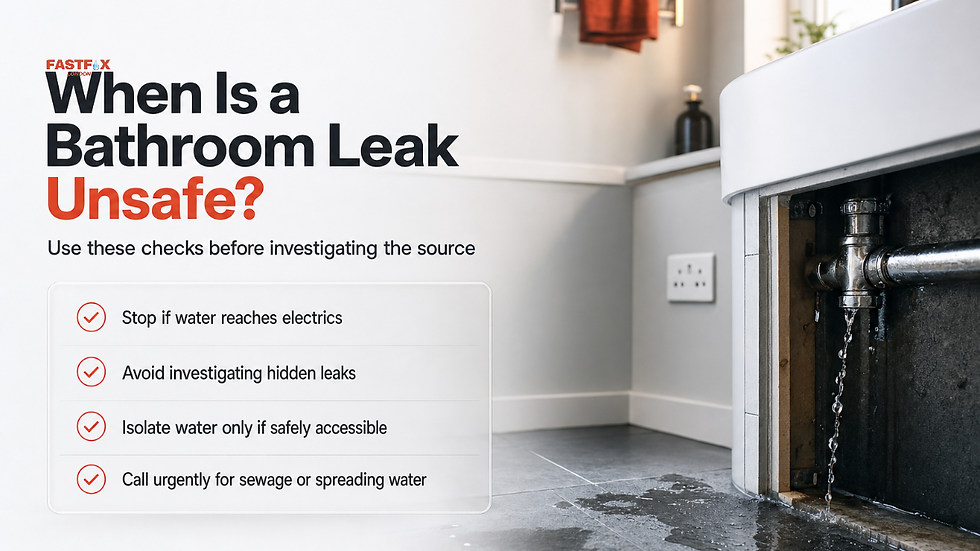
Do not use sealant as a substitute for finding the source. It may hide the visible symptom while water continues to escape behind a fitting or under the floor.
If the fault has damaged bathroom fittings or the installation itself needs changing, you may need more than a small repair. FastFix London also handles bathroom-related plumbing work, and its bathroom installation service in Hammersmith may be relevant where replacement or installation work is part of the solution.
How a hidden bathroom leak may be investigated
The first task is to establish whether water is still escaping and which part of the system is involved. The plumber may check visible connections, isolate sections of pipework and carry out pressure testing where appropriate.
For concealed leaks, FastFix London’s process can include an initial assessment followed by acoustic listening equipment or thermal imaging, depending on the fault. Once the source is identified, the repair should be followed by testing to confirm that the leak has been resolved.
What information should you give the plumber?
Before calling, note whether the water is clean or dirty, when the problem started and whether it changes when the toilet, shower, bath or basin is used. Tell the plumber if water has reached a ceiling, floor, electrical fitting or neighbouring property.
Also mention any temporary action already taken, such as closing an isolation valve or the main stopcock. This helps avoid repeating checks and makes clear whether the property is still at risk of further water damage.
When should you arrange a routine repair instead?
A dripping tap, slow basin waste, loose toilet seat or minor running toilet may be suitable for a planned appointment if there is no spreading water, contamination, electrical risk or sign of hidden damage. Even small leaks should not be ignored indefinitely, particularly around flooring and fitted units.
If the problem is recurring, the repair has already been attempted, or you cannot identify where the water is coming from, arrange an inspection rather than repeatedly tightening parts. The right repair depends on the failed component and whether surrounding materials have been affected.
Need help with an urgent bathroom leak? If you cannot safely isolate the water or the source may be concealed, arrange a professional assessment and repair through FastFix London’s bathroom plumbing service.


Comments